
Light in the Darkness
The month of January is named after a Roman false god called Janus. When pictured, Janus is shown as having two faces: One looking back and one looking forward. Many times, it has one face of sorrow, confusion and disappointment. The other one, looking forward, has a face of hope and confidence.
During the last week of December, newscasters often look back at the significant events of the past year. Things like the triumphs and failures of prominent people, natural disasters, economic challenges, and the deaths of celebrities and leaders. The most surprising events usually receive top billing.
If you reviewed and made a list of the past year of your life, what would appear on that list? Has an unexpected event caused you to question God or to more deeply experience His goodness? What has this past year been like for you? Sorrowful, confusing, tragic, heartbreaking, disappointing and even hurtful? Or perhaps you have experienced a happy, good, successful, joyful year?
When I think about this I am reminded of Philippians 3:13-14 which says:
Brethren, I count not myself to have apprehended: but this one thing I do, forgetting those things which are behind, and reaching forth unto those things which are before, I press toward the mark for the prize of the high calling of God in Christ Jesus.
As we look to this New Year, 2026, it is nearly impossible to erase all the bad memories of last year. However, this verse means we must no longer be influenced by or affected by those difficulties. We can rise above them with the power of the Holy Spirit.
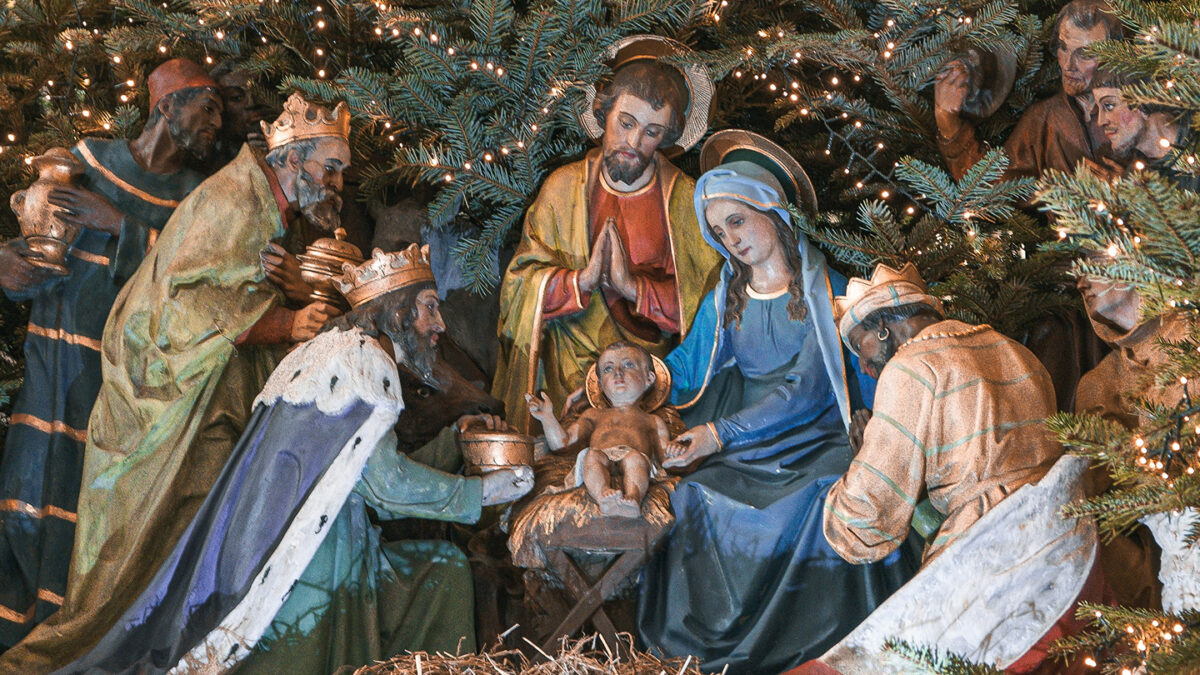
There is however one day in the past that we should always look back to. That is Christmas – or at least to that wonderful event in history that made all the difference to the entire world. When you think about the birth of this baby Jesus, it seemed so insignificant to many, but it is the greatest thing that could happen for us all. This should always keep joy in our hearts no matter what may come our way.
This event of Christmas, the birth of a baby born in Bethlehem, to many was nothing in comparison to the affairs of the Roman Empire. Great things were happening there – expanding their borders, conquering their known world and Caesar was great. Yet, the Roman Empire has long been gone. No more Roman legions marching around. No more Caesars ruling. All that of great importance back then has faded away.
However, what happened in Bethlehem, which seemed unimportant, has proven to last throughout the ages. How weak Jesus must have seemed as a baby and how weak He must have appeared at the end of His life on the cross. Some even scoffed at Him that day on the cross saying: He saved others, himself he cannot save. This was not weakness. This was great strength and love – love for the whole world. He died that others might be saved from their own sins.
The Christmas story in Luke 2 tells us that Jesus came as the Savior of the world. He came to seek and to save that which was lost – those lost in spiritual darkness, those lost in their sins. In the middle of Luke chapter 2, we see Simeon in the temple who had been waiting for the Messiah. He comes upon Jesus who was a little boy and notice what he says in Luke 2:28-32:
Then took he him up in his arms, and blessed God, and said, Lord, now lettest thou thy servant depart in peace, according to thy word: For mine eyes have seen thy salvation, Which thou hast prepared before the face of all people; A light to lighten the Gentiles, and the glory of thy people Israel.
Notice he says a light to lighten the Gentiles and the glory of the people Israel. Jesus came over 2,000 years ago as the Light of the world. As Jesus is identified as the “light of the world,” it was truly a light that was to illuminate the entire world with the knowledge of God and His redemptive love. It was meant to shine not only in our hearts, but it was intended to dispel the darkness in Africa, Asia, and the uttermost parts of the earth. Since it was more than 2,000 years ago when that Light came; why does darkness still cover the earth?
(to be continued in January)